How to Test Your Best Posting Time in 2 Weeks
A simple two-week framework for testing your best social media posting time with clearer metrics and fewer false conclusions.
Quick Answer
To test your best posting time, choose one primary window, publish similar content in that window for two weeks, and compare the right metrics for your goal.
Do not judge a posting time from one post. Timing is only one variable, so the test needs enough repetition to separate schedule effects from content quality, topic, and randomness.
Start with a calculator-backed window
Use BestTimeToPost to choose a platform, audience country, niche, content type, and goal before you start your two-week timing test.
Calculate My Best Time
Why Timing Tests Matter
Best time benchmarks are starting points. Your own audience may behave differently because of location, niche, account size, content format, or buying intent.
A timing test helps you answer a more useful question: which window works best for your account, with your content, for your goal?
Step 1: Pick One Primary Window
Start with one calculator recommendation. For Instagram, use Best Time to Post on Instagram. For TikTok, use Best Time to Post on TikTok.
If you need to publish today, use the relevant today page first:
Step 2: Keep the Content Similar
A clean timing test needs similar content conditions. You do not need identical posts, but you should avoid comparing completely different formats.
Try to keep these stable:
- Content format.
- Topic category.
- Hook style.
- Audience target.
- Posting goal.
- Hashtag and caption approach.
For example, do not compare an Instagram Reel posted on Friday evening against a carousel posted on Monday morning and assume the time caused the difference.
Step 3: Track the Right Metrics
Choose metrics based on the goal:
| Goal | Metrics to watch |
|---|---|
| More views | Reach, impressions, watch time, completion rate |
| More engagement | Comments, saves, shares, replies |
| More followers | Profile visits, follows, follow rate |
| More sales | Link clicks, product views, leads, purchases |
For TikTok, watch time and completion rate matter a lot. For Instagram carousels, saves and shares can be more useful than raw likes.
Step 4: Run the Test for 2 Weeks
Use the same primary window for at least two weeks. This gives you enough data to avoid reacting to one outlier.
If you post frequently, you can compare two nearby windows:
- Window A: the main recommendation.
- Window B: a practical backup window.
Do not test five windows at once. Too many variables make the result hard to understand.
Step 5: Decide What to Change
At the end of two weeks, choose one action:
- Keep the window if results are stable or improving.
- Shift the window by 1-2 hours if performance is close but not strong.
- Test another day if weekday behavior looks meaningfully different.
- Change the content strategy if timing looks fine but creative signals are weak.
For day-specific tests, use pages like Instagram Monday, Instagram Friday, TikTok Friday, or TikTok Sunday.
Common Mistakes
- Changing the schedule after one post.
- Comparing different content formats as if only timing changed.
- Tracking only likes.
- Ignoring audience timezone.
- Testing a window you cannot repeat consistently.
FAQ
How long should I test a posting time?
Test for at least two weeks. If you post less often, run the test longer until you have enough comparable posts.
What metric matters most?
It depends on the goal. Views need reach and retention. Engagement needs comments, saves, and shares. Sales need clicks and conversions.
Should I change my posting schedule every week?
No. Frequent changes make it hard to know what is working. Keep a window long enough to see a pattern.
Are best time benchmarks useless?
No. Benchmarks are useful starting points, but your own audience data should decide the final schedule.
Editorial validation framework
How to turn this guide into a real posting-time test
This article should be used as a decision framework, not as a fixed promise that one hour will work for every account. The practical question is whether a Instagram window gives your specific audience enough attention to notice the post, understand it, and take the action you care about.
For your target audience, the useful test is to connect timing with behavior. A post designed for quick reach should be judged differently from a post designed for saves, profile visits, replies, bookings, or sales. That is why BestTimeToPost separates audience timezone, content format, publishing timezone, and goal before recommending a window.
1. Define the audience
Choose the country, region, or buyer segment that matters most for this post. Use audience time as the starting point, then convert it into your local publishing time.
2. Keep one variable steady
Compare similar feed, story, carousel, or video posts before changing the schedule. If topic, hook, offer, and timing all change at once, the result is hard to trust.
3. Review the right metric
Use the metric that matches the goal of the post as the primary signal, then compare secondary signals such as comments, shares, follows, clicks, and conversions.
| Check | Why it matters | Action |
|---|---|---|
| Search intent | The reader wants a practical Instagram timing decision, not a generic benchmark list. | Give the calculator inputs that match the actual post and audience. |
| Content format | Different feed, story, carousel, or video formats create different attention patterns. | Test one format at a time before standardizing the calendar. |
| Business signal | The best window should improve the metric that matches the goal of the post, not only passive reach. | Write down the primary metric before the post goes live. |
| Retest trigger | Audience mix, creative format, seasonality, and platform behavior can change. | Rerun the test when the audience, goal, or content format changes. |
A simple two-week benchmark
Pick one primary window from the calculator and one backup window. Publish comparable posts in each slot for two weekly cycles. Record the first-hour result, the 24-hour result, and the final result. Keep the slot only when the same pattern appears more than once. This prevents one lucky post, one weak topic, or one unusual day from becoming your entire posting strategy.
Author

Categories
Platform calculators
More Posts
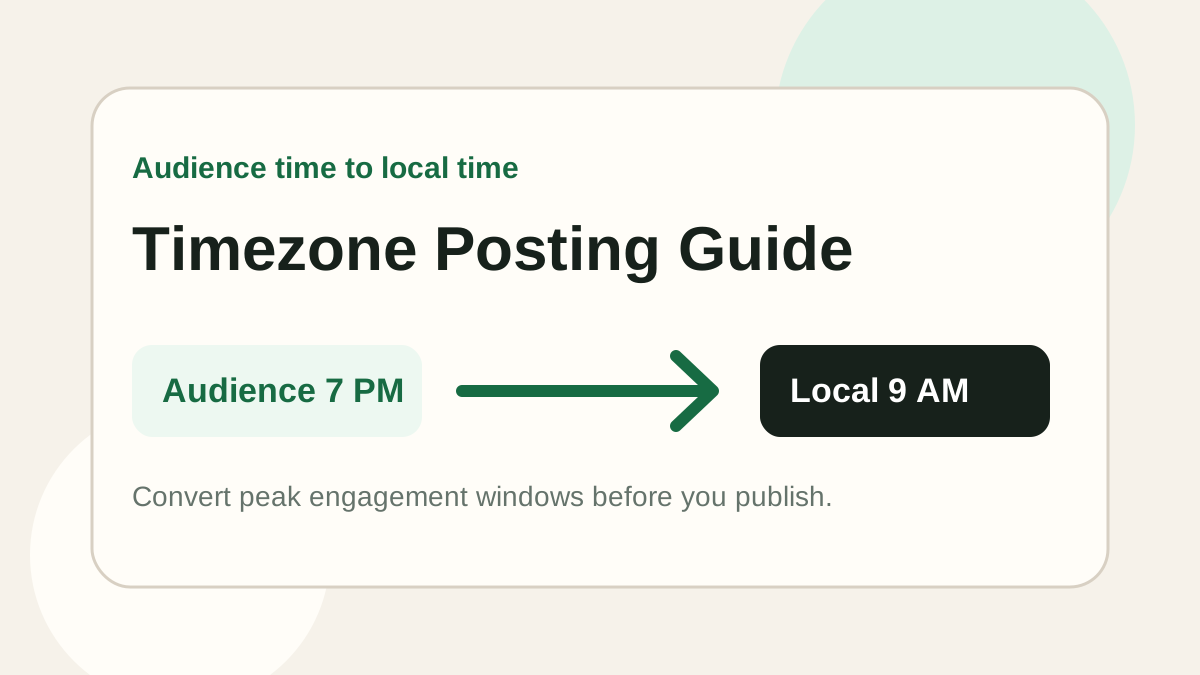
Should You Post Based on Your Timezone or Your Audience's Timezone?
Learn whether you should post based on your own timezone or your audience's timezone, and how to convert audience peak hours into your local posting time.
How to Find the Best Time to Post on Instagram
Learn a practical method for finding your own best Instagram posting time without relying only on generic benchmark lists.
如何找到 TikTok 最佳发布时间
学习如何根据受众时区、内容类型、发布目标和可重复的测试流程,选择 TikTok 发布时间。