Best Time to Post for a Global Audience
Learn how to plan social media posting times when your audience is spread across countries, regions, and timezones.
Quick Answer
The best time to post for a global audience is not one universal hour. Choose the audience region that matters most for the post, convert that audience window into your local time, then test whether the result works for your goal.
Start with the best time to post calculator for Instagram, or use the specific calculator for TikTok, LinkedIn, YouTube Shorts, or Facebook.
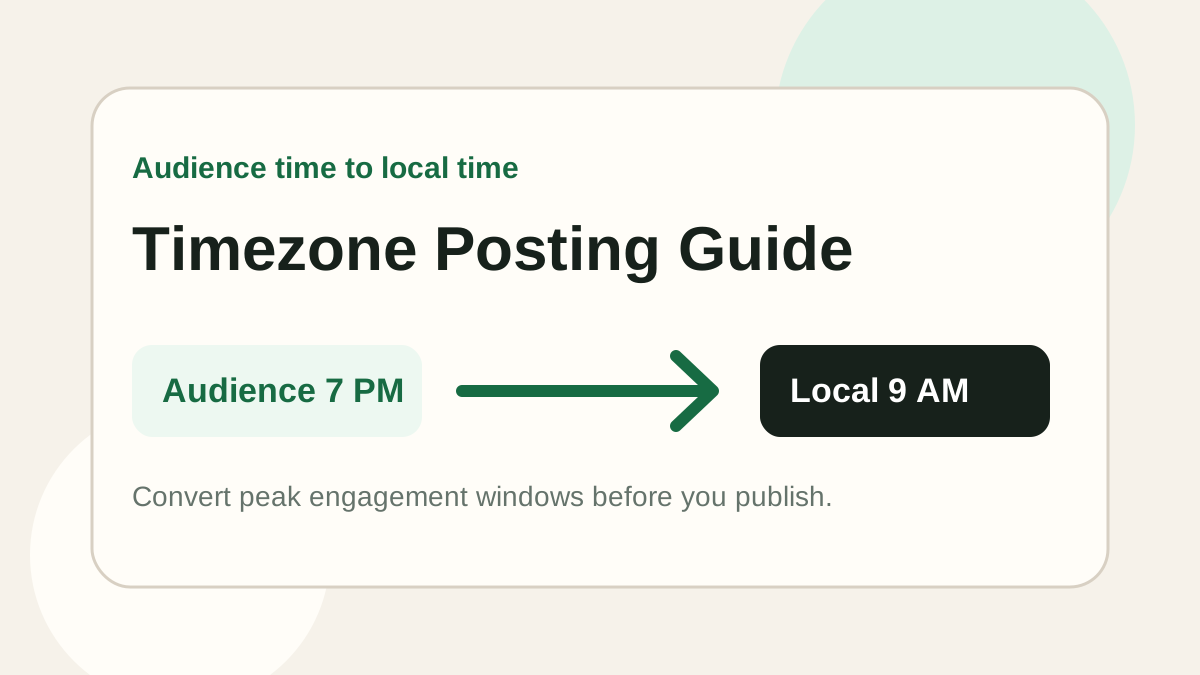
Convert audience time into local posting time
Pick the audience country first, then publish from your own timezone with less guesswork.
Calculate My Best Time
Why Global Timing Is Hard
Global audiences create a tradeoff. A post that is perfect for London may be early for New York and late for Singapore. Trying to hit everyone equally often produces a vague middle that is not ideal for anyone.
A better approach is to choose a primary audience for each post. If the post is for US buyers, optimize for the US. If it is for European partners, optimize for Europe. If it is a broad creator update, test overlap windows and watch which region responds.
Three Global Timing Strategies
| Strategy | Best for | Tradeoff |
|---|---|---|
| Primary market timing | Sales, launches, B2B | Other regions may see it later |
| Overlap window | General updates, creator content | Not perfect for any one region |
| Regional reposting | Large teams, localized campaigns | Requires more content planning |
Most small teams should start with primary market timing. It is clearer and easier to test.
How to Choose the Primary Audience
Use these questions:
- Which country produces the most revenue or leads?
- Which audience is the post written for?
- Which region has the strongest follower base?
- Which timezone creates the highest-quality engagement?
- Which market matters for this campaign?
The answer can change by post. A launch, educational guide, creator update, and hiring announcement may all target different regions.
Platform Differences
Instagram and TikTok can sometimes tolerate broader windows because content may travel through discovery. LinkedIn is more sensitive to workday routines. YouTube Shorts may continue distributing after the upload window, but early viewer behavior still matters. Facebook depends heavily on whether the post is for a page, group, video, or local audience.
Testing Global Windows
Pick two regions or overlap windows. Test similar content for two weekly cycles. Track performance by geography when the platform provides it.
Look beyond reach. Compare saves, comments, profile visits, follows, clicks, leads, and sales by region. The best global posting time is the one that serves the most valuable audience, not always the largest one.
Common Mistakes
Do not say "global time" without naming the audience region. Global is not a timezone.
Do not optimize every post for the largest country if the post is not written for that market.
Do not repost identical content too many times for regions unless the value is clear. Localized intros or examples can make reposting more useful.
FAQ
Should I post twice for global audiences?
Sometimes, but start with one primary market. Add regional versions only if the data supports it.
What timezone should creators use?
Use the timezone of the audience you want to grow or monetize, not only your own.
What timezone should B2B teams use?
Use the buyer or decision-maker timezone for the campaign.
What should I read next?
Editorial validation framework
How to turn this guide into a real posting-time test
This article should be used as a decision framework, not as a fixed promise that one hour will work for every account. The practical question is whether a TikTok window gives your specific audience enough attention to notice the post, understand it, and take the action you care about.
For a global audience, the useful test is to connect timing with behavior. A post designed for quick reach should be judged differently from a post designed for saves, profile visits, replies, bookings, or sales. That is why BestTimeToPost separates audience timezone, content format, publishing timezone, and goal before recommending a window.
1. Define the audience
Choose the country, region, or buyer segment that matters most for this post. Choose the primary market first instead of trying to satisfy every timezone equally.
2. Keep one variable steady
Compare similar feed, story, carousel, or video posts before changing the schedule. If topic, hook, offer, and timing all change at once, the result is hard to trust.
3. Review the right metric
Use regional engagement quality and conversions as the primary signal, then compare secondary signals such as comments, shares, follows, clicks, and conversions.
| Check | Why it matters | Action |
|---|---|---|
| Search intent | The reader wants a practical TikTok timing decision, not a generic benchmark list. | Give the calculator inputs that match the actual post and audience. |
| Content format | Different feed, story, carousel, or video formats create different attention patterns. | Test one format at a time before standardizing the calendar. |
| Business signal | The best window should improve regional engagement quality and conversions, not only passive reach. | Write down the primary metric before the post goes live. |
| Retest trigger | Audience mix, creative format, seasonality, and platform behavior can change. | Rerun the test when the audience, goal, or content format changes. |
A simple two-week benchmark
Pick one primary window from the calculator and one backup window. Publish comparable posts in each slot for two weekly cycles. Record the first-hour result, the 24-hour result, and the final result. Keep the slot only when the same pattern appears more than once. This prevents one lucky post, one weak topic, or one unusual day from becoming your entire posting strategy.
Author

Categories
Platform calculators
More Posts
Should You Post Based on Your Timezone or Your Audience's Timezone?
Learn whether you should post based on your own timezone or your audience's timezone, and how to convert audience peak hours into your local posting time.
Why Your Best Posting Time Changes by Day of the Week
Your audience behaves differently on Monday vs Saturday. Learn why your best posting time shifts each day and how to plan a weekday-aware posting schedule.
How to Test Your Best Posting Time in 2 Weeks
A simple two-week framework for testing your best social media posting time with clearer metrics and fewer false conclusions.